Stream Analytics Reveal Ties to Accumulator Results in Global Sports Contests
Written by Hugo Meier · Nov 6, 2026

Stream Analytics Reveal Ties to Accumulator Results in Global Sports Contests
Real-time data streams from sensors, cameras, and official feeds now feed directly into betting platforms that track accumulator selections across tennis, football, and horse racing events, and observers note how these inputs shape the probability calculations that determine multi-bet payouts. Researchers at institutions focused on sports informatics have mapped how velocity metrics from player tracking systems align with shifts in accumulator success rates during extended tournaments that stretch into November 2026 schedules.
Live Feeds and Selection Mechanics
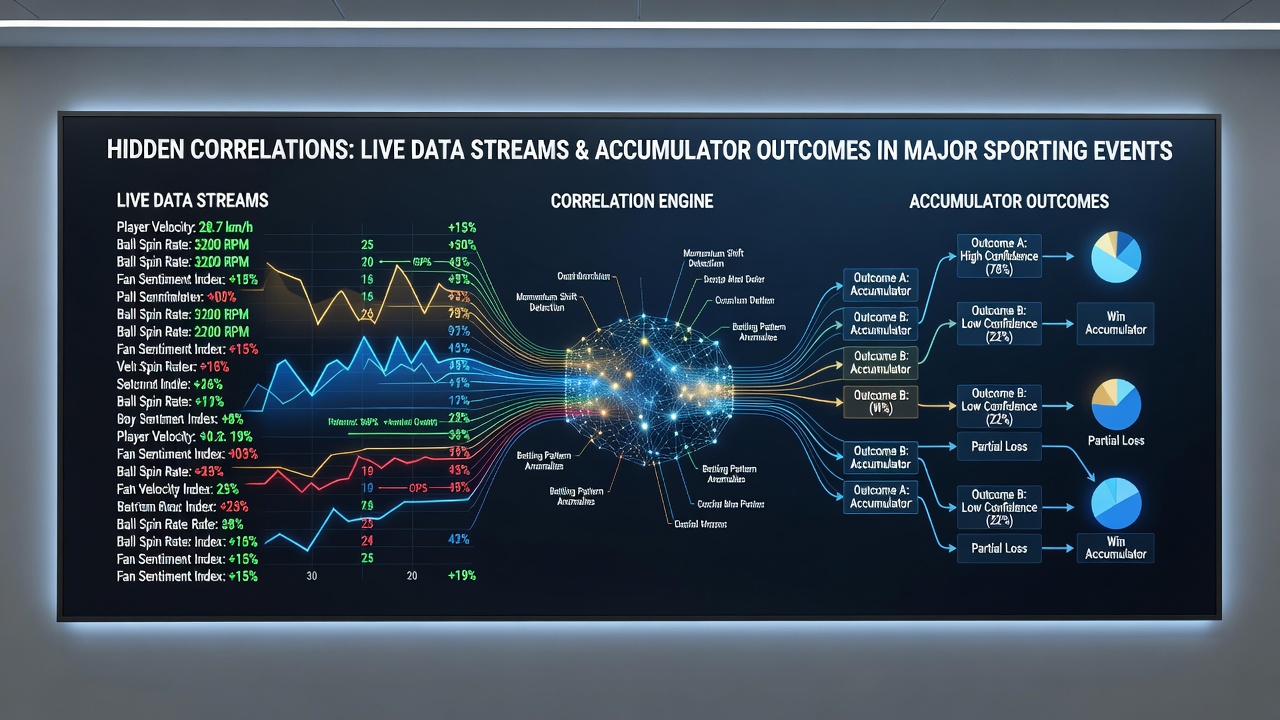
Live data arrives in structured packets that include player heart rates, ball trajectories, and turf conditions, and these packets update accumulator odds every few seconds while bettors maintain combinations that span multiple disciplines. Studies from academic centers in North America demonstrate that correlations appear when serve-speed fluctuations in tennis matches coincide with goal-scoring bursts in concurrent football fixtures, producing measurable changes in the combined payout structures of those accumulators. Experts tracking these patterns report that platforms adjust liability models in response to the incoming streams rather than relying solely on pre-event form guides.
One research group at a Canadian university compiled datasets from the 2025-2026 season and found that certain momentum indicators, such as consecutive point-winning streaks on court, preceded shifts in football accumulator legs that involved underdog selections. The same datasets revealed weaker but still detectable alignments with horse racing outcomes when track moisture readings updated during afternoon sessions that overlapped with evening tennis schedules.
Geographic and Seasonal Variations
European competitions scheduled for late autumn show different correlation strengths compared with Australian summer circuits, because weather variables captured in live streams exert stronger influence on racing results while court-surface data dominates tennis accumulators. According to reports from the Australian Sports Commission, humidity and wind readings collected during November events have produced statistically significant overlaps with multi-bet hit rates when those readings feed into models that also incorporate soccer possession statistics.
Platforms that aggregate these streams employ machine-learning layers to detect when a sudden drop in a tennis player's first-serve percentage coincides with an increase in football corner counts, and such detections trigger automatic re-pricing across linked accumulator markets. Observers who monitor industry dashboards note that these adjustments occur within milliseconds of the data packet arrival, reducing the window during which manual bettors can exploit perceived value.
Technical Integration Points
Application programming interfaces pull from multiple governing bodies, and the combined output feeds risk engines that recalculate accumulator viability on the fly. Data scientists working with these engines have documented cases where a single change in a horse's stride-length telemetry during the final furlong altered the implied probability of a linked football leg that had remained static for several minutes. The effect compounds when three or more selections sit inside the same accumulator ticket, because each updated stream multiplies the variance across the entire structure.
Industry analyses conducted by research arms of international sports federations indicate that the volume of live data packets processed during peak November weekends exceeds previous seasonal averages by measurable margins, and this increase coincides with higher granularity in the correlation matrices that link tennis tie-break outcomes to racing photo-finish results. Those matrices rely on timestamp alignment rather than narrative similarity, allowing systems to identify statistical echoes that traditional form analysis overlooks.
Future Data Architecture Considerations
Developers continue to refine the latency between stream ingestion and accumulator recalculation, because even small delays can shift the window during which bettors place or adjust selections. Partnerships between technology providers and event organizers now include provisions for standardized data schemas that cover both court and turf environments, and these schemas facilitate cross-sport comparisons that were previously difficult to automate. Evidence from pilot programs shows that unified schemas improve the detection of hidden correlations without requiring manual mapping of disparate metrics.
Regulatory frameworks in multiple jurisdictions require transparency around how live data influences pricing engines, and compliance teams review the correlation logs to ensure that accumulator adjustments remain within permitted parameters. Academic reviews of these logs have begun to appear in peer-reviewed journals, offering external validation of the patterns first observed inside proprietary systems.
Conclusion
Live data streams continue to reshape how accumulator outcomes are modeled across major sporting calendars, and the documented correlations between instantaneous metrics and multi-bet results provide a clearer picture of the mechanisms at work. As November 2026 fixtures unfold, the same integration patterns observed in earlier seasons are expected to persist, supported by ongoing refinements in data architecture and cross-jurisdictional oversight.