Performance Synergies Across Athletic Fields: Strategies for Building Resilient Multi-Event Betting Combinations
Written by Tina Braun · Oct 9, 2026

Performance Synergies Across Athletic Fields: Strategies for Building Resilient Multi-Event Betting Combinations
Performance synergies across athletic fields emerge when bettors combine outcomes from events such as sprints, jumps, throws, and endurance races into structured combinations that account for physiological overlaps and seasonal form patterns; data from multi-sport competitions shows that athletes who excel in speed-based disciplines often maintain consistent power outputs across related events, creating measurable correlations that influence accumulator structures. Observers note these connections become particularly relevant during major international meets where schedules compress multiple disciplines into short windows, allowing patterns in recovery times and event sequencing to shape betting resilience.
Mapping Physiological Links in Track and Field Disciplines
Researchers have documented how explosive power developed for the long jump transfers to certain throwing events while sprint mechanics align closely with hurdles and relay segments, and these overlaps allow for combinations that balance risk across categories rather than isolating single outcomes. Studies of elite performers indicate that training cycles emphasizing core strength and neuromuscular coordination produce parallel improvements in multiple events, which in turn affects how form guides are interpreted when building multi-leg selections. Those who analyze competition calendars point out that events scheduled on consecutive days introduce fatigue variables that can either amplify or dampen expected results depending on an athlete's event profile and recovery protocols.
Constructing Combinations with Seasonal and Environmental Variables
Seasonal data reveals that outdoor championship periods in mid-year produce different synergy profiles compared with indoor circuits, where surface types and venue altitudes alter performance baselines across disciplines, and bettors incorporate these factors by cross-referencing historical results from similar conditions. Environmental elements such as wind readings, temperature ranges, and track surfaces further modulate outcomes, prompting structured approaches that pair events with opposing weather sensitivities to stabilize overall returns. Figures from governing bodies in various regions show that consistent tracking of these variables across multiple seasons yields tighter probability ranges for combined selections than single-event wagers alone.
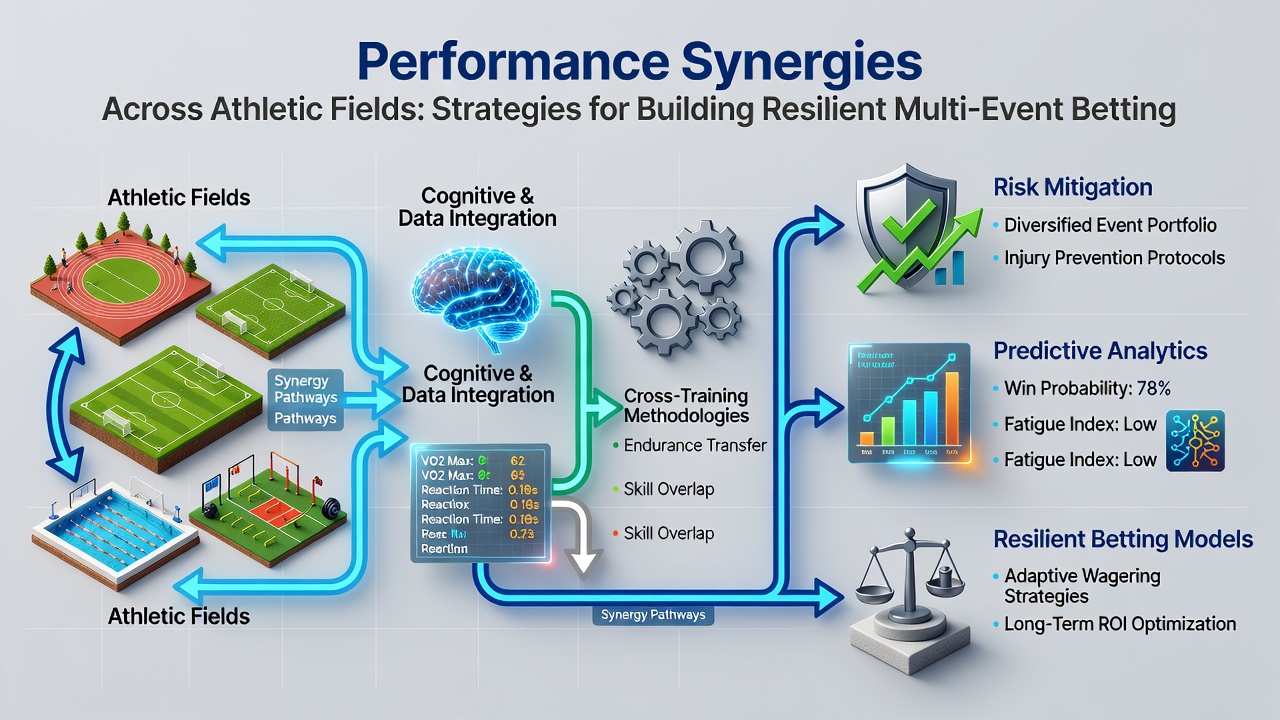
Integrating Data Sources for Resilient Selection Frameworks
Comprehensive frameworks draw on performance databases maintained by international athletics federations alongside injury registries and training-load metrics, allowing for layered assessments that weigh an athlete's primary event strength against secondary-event consistency. According to reports published by the Australian Transaction Reports and Analysis Centre, cross-sport data aggregation methods have expanded in recent years, providing bettors with tools to identify non-obvious linkages between events that share biomechanical demands. In October 2026, updated datasets from continental championships are expected to refine these models further as new performance benchmarks become available.
Betting platforms that aggregate live statistics during meets enable real-time adjustments to combinations, particularly when early-round results in field events signal momentum shifts that carry into subsequent track sessions. Those who monitor these platforms observe that pairing a thrower's consistency metric with a sprinter's reaction-time average can offset volatility inherent in individual disciplines, producing combinations that hold steadier across varying meet conditions.
Adjusting for Regulatory and Market Shifts
Regulatory developments in multiple jurisdictions continue to influence how multi-event combinations are offered and settled, with emphasis on transparency in odds compilation and consumer protections around accumulator products. Research compiled by the National Council on Problem Gambling highlights the importance of clear disclosure regarding event correlations, which in turn shapes the design of resilient betting structures that respect both performance data and compliance requirements. Market operators have responded by refining product ranges to include modular selections that allow partial hedging across athletic categories.
Conclusion
Performance synergies across athletic fields continue to inform strategies for constructing multi-event betting combinations that incorporate physiological, environmental, and scheduling factors into cohesive frameworks. As datasets expand through 2026 and beyond, those analyzing these patterns gain access to increasingly granular tools for balancing selections across track and field disciplines. The integration of cross-event correlations with regulatory considerations supports the ongoing evolution of structured approaches that prioritize measurable resilience over isolated outcomes.